
Single or Double Chip Seal for Hill Country Driveways
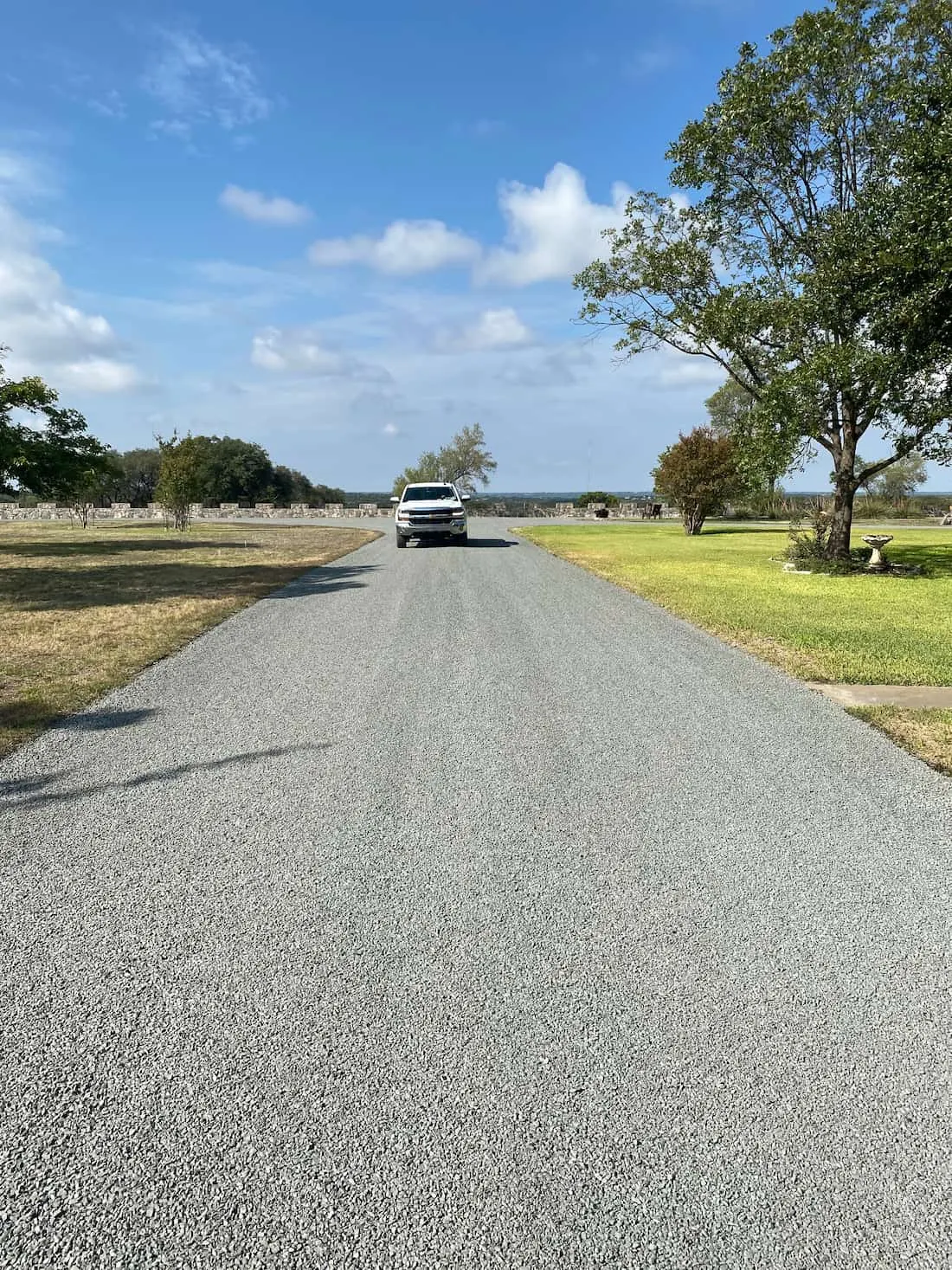
A single chip seal coat usually fits a sound driveway with light to moderate traffic. A double coat may fit a driveway that needs more build-up, takes heavier use, or has a rougher surface to cover. If you are weighing chip seal paving for a drive in or near Fredericksburg, the existing surface's needs can help guide the coat count.
What single and double chip seal mean
Chip seal has two working parts. The binder is the liquid asphalt that sprays onto the surface and acts as glue. The aggregate is the stone chips that get spread over the wet binder and rolled in so they lock into place.
A single coat is one pass of each: one layer of binder, one layer of stone. Once the binder sets and the loose stone is swept off, you have a textured, sealed surface.
A double coat repeats the process. A second layer of binder goes over the first layer of stone, and another layer of stone goes on top. The two layers often use different stone sizes, with larger chips first and smaller chips on top, though your contractor may spec it differently. The result is a thicker, more tightly knit wearing surface.
Side by side
| Factor | Single coat | Double coat |
|---|---|---|
| Layers of binder and stone | One of each | Two of each |
| Typical fit | Sound surface, lighter traffic | Rougher surface, heavier or more demanding use |
| Surface texture | May have coarser, more visible stone | Often tighter and more even |
| Time on site | Often shorter | Often longer, with added steps |
| Cost drivers | Area, prep, stone and binder | Same, plus a second pass of materials and labor |
How to choose between one coat and two
Start with the surface underneath. Chip seal is a wearing surface, not a fix for a failing base. The base is the compacted stone or soil layer under the driveway, and if it is soft, pumping or washed out, extra coats will not hold it up. Soft spots and deep ruts usually need repair before any chip seal goes down, whether it is one coat or two.
Next, think about how the driveway gets used. A short drive for a couple of cars is a different job from a long ranch entrance with trucks, trailers and deliveries. Turning areas, parking pads and the spot where the drive meets the road can experience tire scrubbing, and a thinner surface may wear sooner in those areas.
Then ask what the coat count is supposed to solve. A second coat can make sense when the first layer would have to bridge a rough or uneven surface, or when you expect hard use. It is not automatically better. If a single coat covers a sound surface well, a second coat may add cost without much additional benefit.
- Sound, even surface and light use: a single coat is often enough.
- Worn, patched or varied surface: a double coat may help even things out, after repairs.
- Heavy vehicles or tight turning: ask whether two coats or extra prep at the turns makes more sense.
- Weak base or standing water: fix the cause first, then pick a coat count.
Conditions to consider in the Hill Country
Texas Hill Country summers often run hot from June into September, and pavement surfaces take that heat. Winters are usually mild, but cold snaps do happen. October and November are often mild and comfortable for outdoor work, though fall rain can show up and surface moisture can push a start date back. Chip seal needs a dry surface and settled weather to bond, so a good contractor will schedule around the forecast rather than force it.
The same goes across the area we serve. A drive outside Kerrville and one near Bandera may look similar and still need different answers. What matters is your lot, and you can check it yourself:
- Drainage: does water run off the drive, or does it sit after a storm?
- Grade: if the drive climbs or drops to the street, tires put more stress on the surface and runoff moves faster.
- Soil: if your yard is clay, the base can swell and shrink with moisture. Watch for soft or cracked edges.
- Length and use: a long rural drive may carry different traffic than a short one near the house.
None of these says single or double on its own. They tell the contractor what to inspect, and the right approach depends on the driveway's actual condition, drainage and use, not just the number of coats.
What to ask before choosing a coat count
Ask the contractor to walk the driveway and assess the existing surface before quoting. You want to hear what preparation is recommended, such as patching, grading or cleaning, and why that coat count fits your drive.
- What is wrong with the surface now, and does the proposed coat count address it?
- What repairs or base work come first?
- What stone size goes in each layer?
- How will drainage be handled at the edges and where the drive meets the road?
- How long should we keep vehicles off after the work, and what happens if it rains?
Have the work and the reason for each layer written into the project scope. That way you can compare quotes on the same terms. If you are also weighing chip seal against other surfaces, our driveway paving page covers the options, and our chip seal driveway paving page explains how we approach this type of job.
We offer a Free Estimate for driveway work, and you can ask whether one coat or two fits.
Common questions
What is the difference between single coat and double coat chip seal?
A single coat is one layer of binder and one layer of stone. A double coat adds a second layer of each, which builds a thicker, tighter wearing surface.
When should you use a double chip seal?
It tends to make sense for rougher or uneven surfaces, heavier traffic, or drives with a lot of turning. It still depends on the base being sound, since extra coats will not fix a weak one.
Is chip seal a good choice for a long driveway?
It can be, because it covers a lot of area with a durable, textured surface. For a long drive, ask how the contractor will handle drainage, steep stretches and the turning areas near the house and the road.
Areas we serve
Our services
Have a question about your project? Call (830) 998-1887